

Why divers call it an electric or disco clam
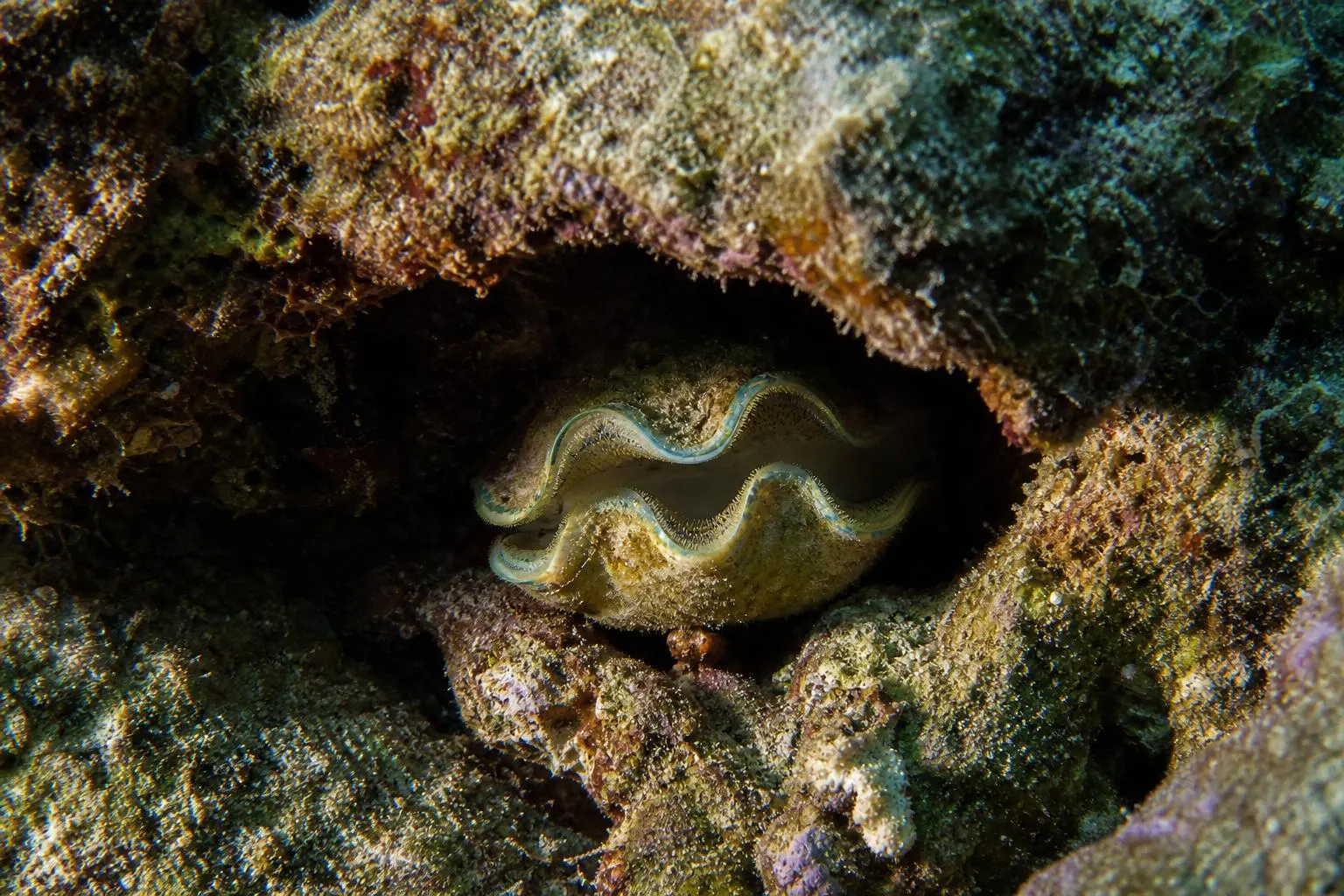
For a guide to “electric clam Gato Island,” start with the key distinction: the clam appears to flash, but it does not produce its own light. The effect comes from ambient light scattered by the animal’s moving mantle edge. That bright-and-dim pattern can resemble a tiny light switching on and off, which helps explain the name. It is a changing reflection, not a glow.
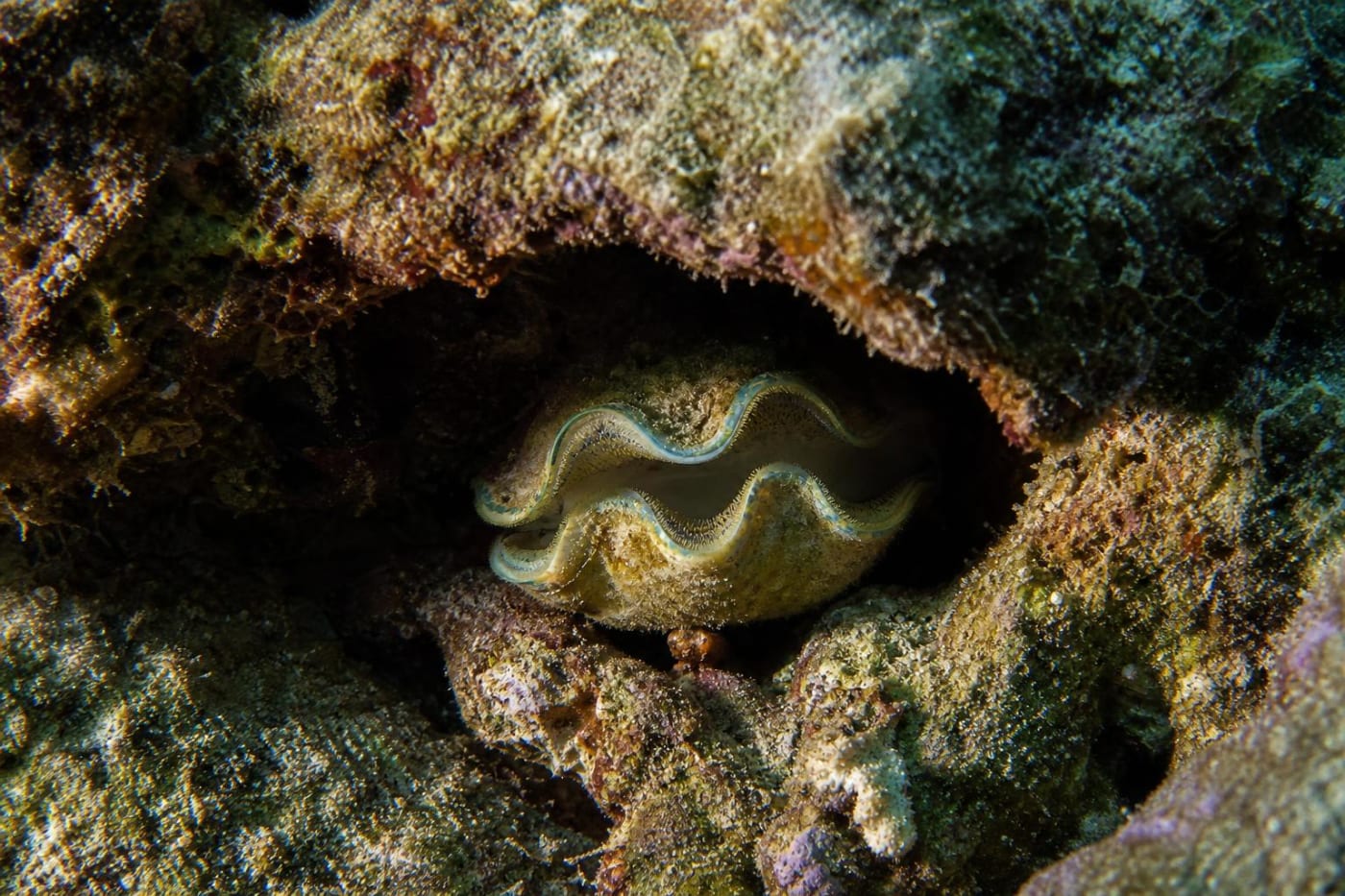
The animal is Ctenoides ales, a bivalve in the Limidae family. It is commonly known as the disco clam as well as the electric clam. Those names describe the striking visual effect. They do not mean the animal is electrically powered or has a light-producing organ.
Electric clams are among the marine life divers may look for on our Gato Island dive site. Our Gato trip information lists them as a possible sighting, not a certainty. Understanding how the display works helps set expectations: the clam’s mantle moves between surfaces that scatter and absorb different amounts of light, and the appearance depends on light being available to reflect.
The flash is reflected light, not a glow
Bioluminescence is light produced by an organism. The electric clam’s display works differently. Ambient light reaches the clam, and part of its mantle edge scatters that light back. As the edge moves, its appearance changes, giving the impression of flashes. The light comes from the surroundings, not from the clam itself.
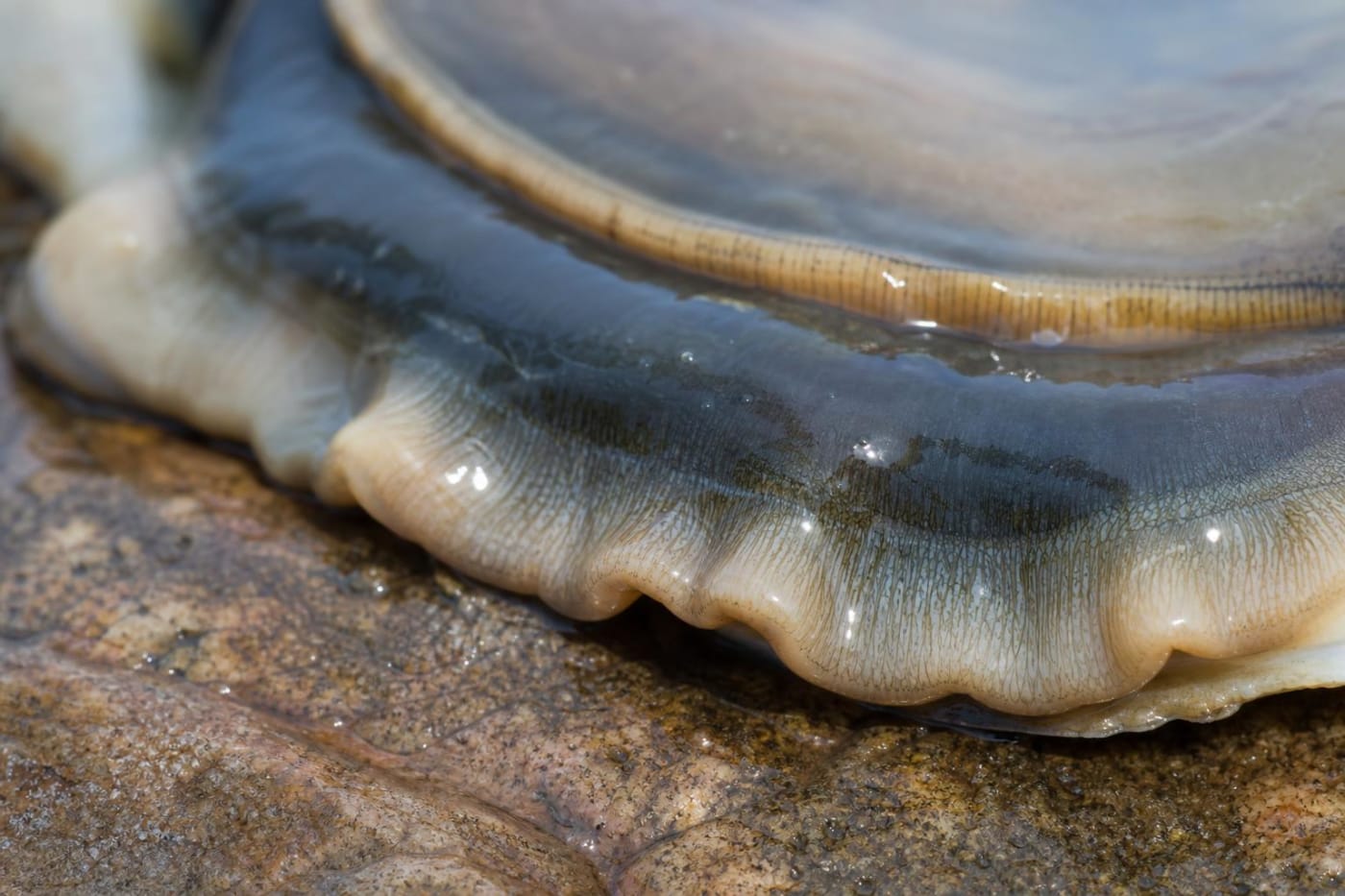
Researchers describe two distinct surfaces along the mantle edge. One scatters light and contains microscopic silica spheres. The other absorbs more light. Rapid movement of the mantle edge alternately exposes the more reflective surface and the less reflective one. That change in reflected brightness creates the flashing pattern without the clam generating light.
The distinction is especially useful when thinking about what a diver might see. A bright-looking edge is not necessarily evidence of a light source inside an animal. In this case, the visible effect is a shift in how ambient light is returned from the mantle. The clam is not shining like a lamp, and the display is not a beam coming out of a crevice.
The display also depends on ambient light being present. Research reports that the flashing could not be seen in darkness, and a later study describes the mantle as visible through reflection when ambient light is present. So it is better to picture a reflective edge whose appearance depends on the light around it, rather than a clam that glows independently of its surroundings.

What is happening in the clam’s mantle
The mantle edge is the part associated with the visible display. Its two surfaces interact with light differently: one scatters it, while the other absorbs more of it. As the edge moves, it alternately exposes these surfaces. The result is a quick change in reflected brightness. This is a physical change in the way light interacts with the tissue, not a flicker caused by an electrical pulse.
Microscopic silica spheres in the reflective surface help scatter ambient light. They are part of the mechanism researchers identified in the clam’s mantle, not tiny lamps or sources of stored light. Scattering changes how available light is sent back from the tissue. When the more reflective surface is exposed, the edge appears brighter; when the less reflective surface is exposed, it appears dimmer.
This explanation gives divers a useful way to interpret the display. Look for the changing edge and its contrast, rather than expecting a point of light inside the clam. The rapid alternation makes the effect appear active, but the mechanism remains a shift between surfaces that scatter and absorb light differently. There is no need to imagine an electrical source or a self-generated glow to explain what is seen.
That mechanism also helps explain why the appearance can vary with the available light. The clam’s reflective surface scatters ambient light, so the display cannot be separated from its surroundings. Researchers report that the effect is not visible in darkness. The central idea is straightforward: the mantle moves, the surface facing outward changes, and the reflected light changes with it.
What research says, and what remains uncertain
Studies report changes in the clam’s flash rate when it encounters a shadow or an approaching, predator-like stimulus. These observations show that the flashing pattern can change in response to something around the animal. They do not, on their own, explain why the display exists or what purpose it serves.
Researchers have discussed possible signaling and antipredator roles. These remain hypotheses rather than settled explanations. The observations do not establish that the flashes warn another animal, deter a predator, or serve one specific purpose. It is useful to keep the two parts of the explanation separate: research describes how the mantle scatters light, while the evolutionary purpose of the display remains uncertain.
A change in flash rate after a shadow or an approaching stimulus is an observation, not proof of intention. It would be too strong to say the clam is definitely trying to send a message or scare something away. The reported research supports a careful account of what changes under those conditions, while leaving the reason for the display unresolved.
This distinction keeps the science clear. The clam’s apparent flash is explained by reflected ambient light and the movement of two different mantle surfaces. Why that display evolved has not been definitively established. Divers can understand the visible mechanism without treating any one proposed function as fact.
Electric clam Gato Island: what divers may see
On a Gato Island dive, the practical point is to look for the clam itself and, if it is visible, notice the changing edge rather than expecting a self-generated glow. Research describes Ctenoides ales as living attached inside small crevices on coral reefs. That describes the species’ habitat in general; it is not a promise that a clam will be visible on a particular dive.
The display depends on ambient light, so the reflected effect may not look the same in every view. A lack of visible flashing does not establish that the animal is absent. The important distinction is that the clam’s mantle reflects available light rather than producing its own. Our Gato Island information lists electric clams among the marine life divers may look for, while noting that sightings depend on natural conditions and cannot be guaranteed.
Our Gato Island trip is a full-morning outing with three guided dives. You can see the three-dive Gato Island trip and its details. Treat an electric clam as a possible encounter, not a promised sighting. The trip information names electric clams among the marine life divers may find, but natural conditions determine what is seen.
If you are planning around a particular date or need current trip details and site-specific conditions confirmed, contact us. If you do encounter an electric clam, the main thing to remember is that its mantle edge alternates between a light-scattering surface and one that absorbs more light. That changing reflection creates the bright, pulsing effect behind the name, without any electricity or light production by the clam.