

For mandarin fish photography Malapascua, decide before the dive whether carrying a camera will let you stay in control and attentive to the people around you. The encounter is an opportunity to observe fish as daylight fades, not a promise of a photograph or a particular display. If using a camera would pull your attention away from buoyancy, your buddy or the guide, leave it behind and enjoy watching.
Decide whether to bring a camera
Prioritize stable buoyancy, awareness and buddy contact over getting an image. A camera system can affect your weighting or buoyancy, and operating it asks for attention. Consider both before choosing to bring it. The useful question is not whether you want a photograph, but whether you can manage the rig while staying aware of the dive.
Think about your comfort holding position and managing your equipment while using the camera. If you are still concentrating on basic control, or if the camera makes it harder to keep track of your buddy and surroundings, this is a good dive to leave it behind. Choosing not to photograph is a considerate decision, not a missed opportunity. You can observe the fish without dividing your attention between the encounter and camera controls.
There is no need to treat a dusk dive as a test of photography skills. Your first responsibility is to dive with control and attention. A camera should not take priority over buoyancy, awareness or buddy contact. If you would like to refresh your diving skills before bringing a camera underwater, see details about our refresher course. Practising those skills before working near sensitive habitat can help you decide whether you are ready to manage both the dive and the camera.
Use a simple decision rule: bring the camera only if you can keep your equipment secure, maintain control and remain aware of the guide, your buddy and nearby divers while using it. If any of those things feels uncertain, make this a camera-free dive. The fish do not owe anyone a photograph, and you do not need a camera to have a worthwhile encounter.
Prepare your camera before the dive
Set up the camera before entering the water, rather than trying to work through menus during the encounter. Decide on a basic approach in advance and become familiar with the controls you expect to use. Check that the camera is working and that you can operate it without searching through menus. This preparation leaves more of your attention available for buoyancy, your buddy and what is happening around you.
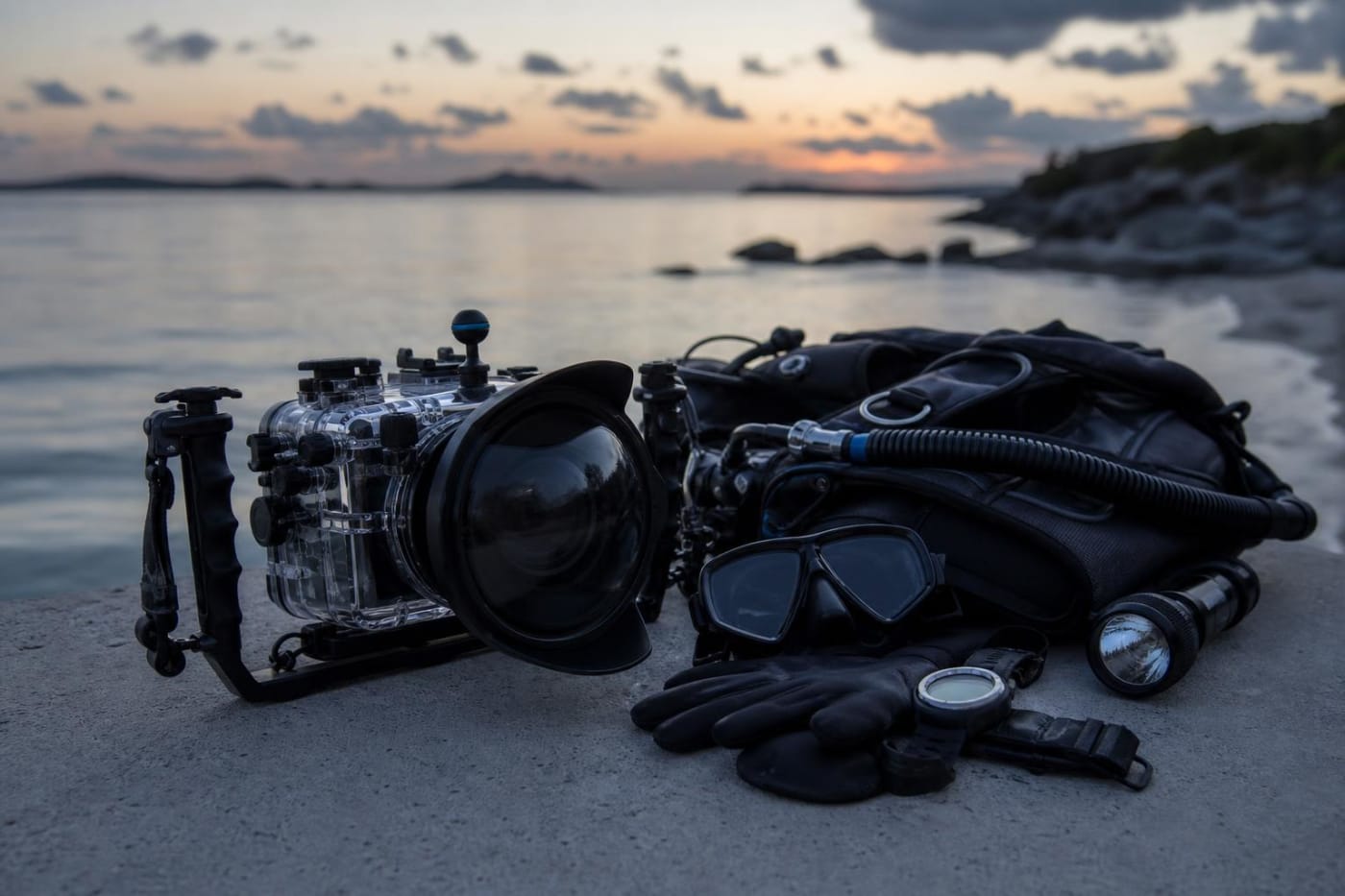
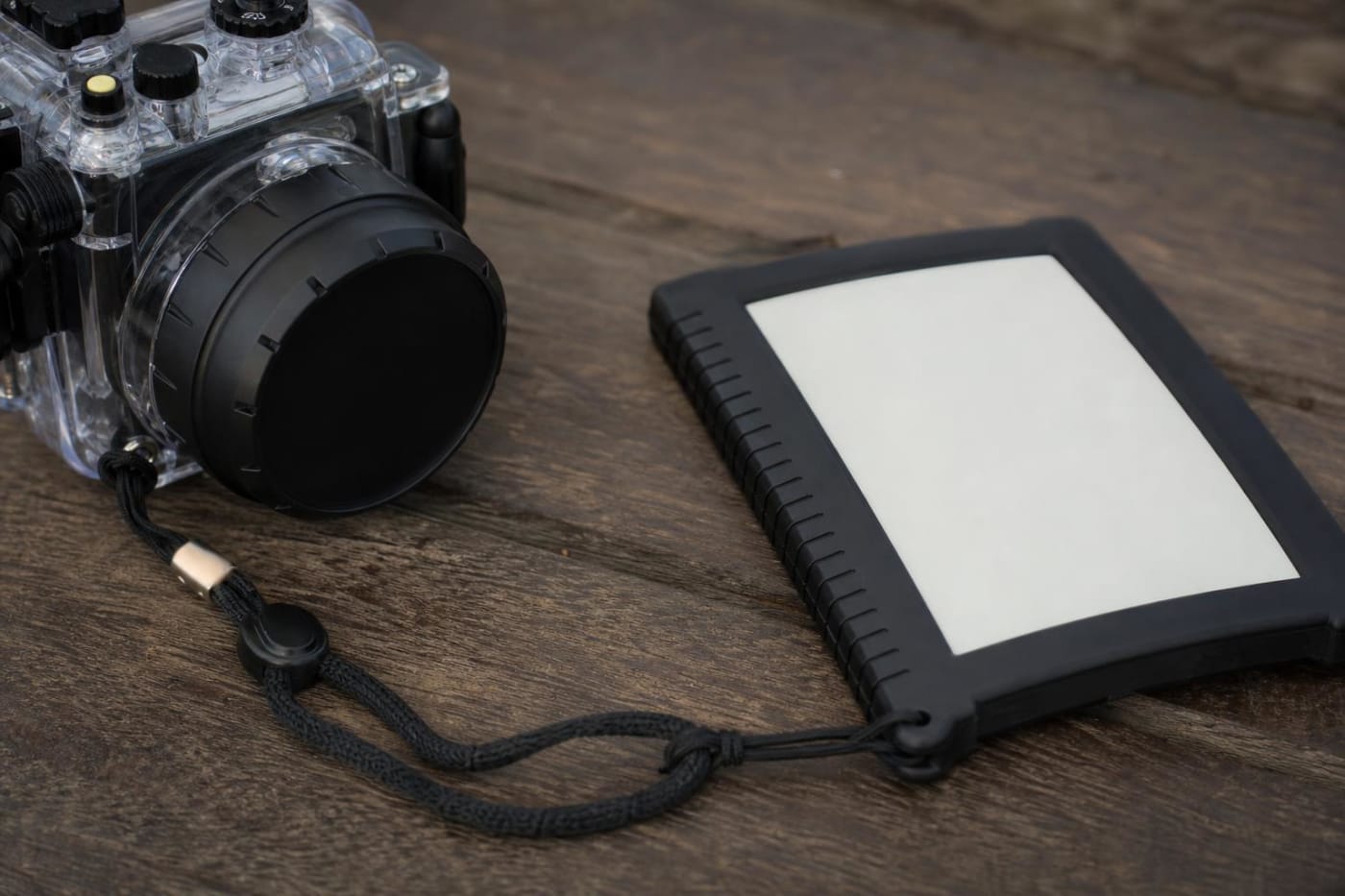
Check that the camera rig and your other equipment are secured. Straps, handles and accessories should not swing into the reef or brush against an animal as you move. Notice how the camera sits with your gear and whether it changes how you hold your position. If the rig feels awkward or affects your balance, do not assume you will sort it out while focused on a subject.
A camera system can change weighting or buoyancy, so include it when thinking about your control in the water. Practise using the rig and your diving skills before working near sensitive habitat. Pay attention to whether you can remain in control and aware of your surroundings while operating the camera. If you find yourself concentrating on the equipment at the expense of the dive, pause the photography.
Keep the preparation practical. Know how you will hold the camera and where its attached equipment sits, and make sure the rig is secured before entering the water. You do not need to spend the encounter troubleshooting or making repeated adjustments. If something is not working as expected, put the camera aside and return your attention to the dive. A missed image is a better outcome than contact with the reef or an animal.
Give the fish space and time
Observe mandarin fish without touching, handling, moving, chasing or manipulating them to create a photograph. Keep space between yourself and the fish, and let them choose how close they come. Do not move coral rubble or try to expose a fish that has tucked itself away. The subject’s natural behaviour matters more than a closer frame.
Move slowly and give the encounter time to unfold. Repeated attempts to follow a fish can interrupt what you came to observe. If a fish moves away or disappears into cover, let it go rather than pursuing it. Waiting patiently gives you the chance to notice natural behaviour without trying to provoke activity for the camera.
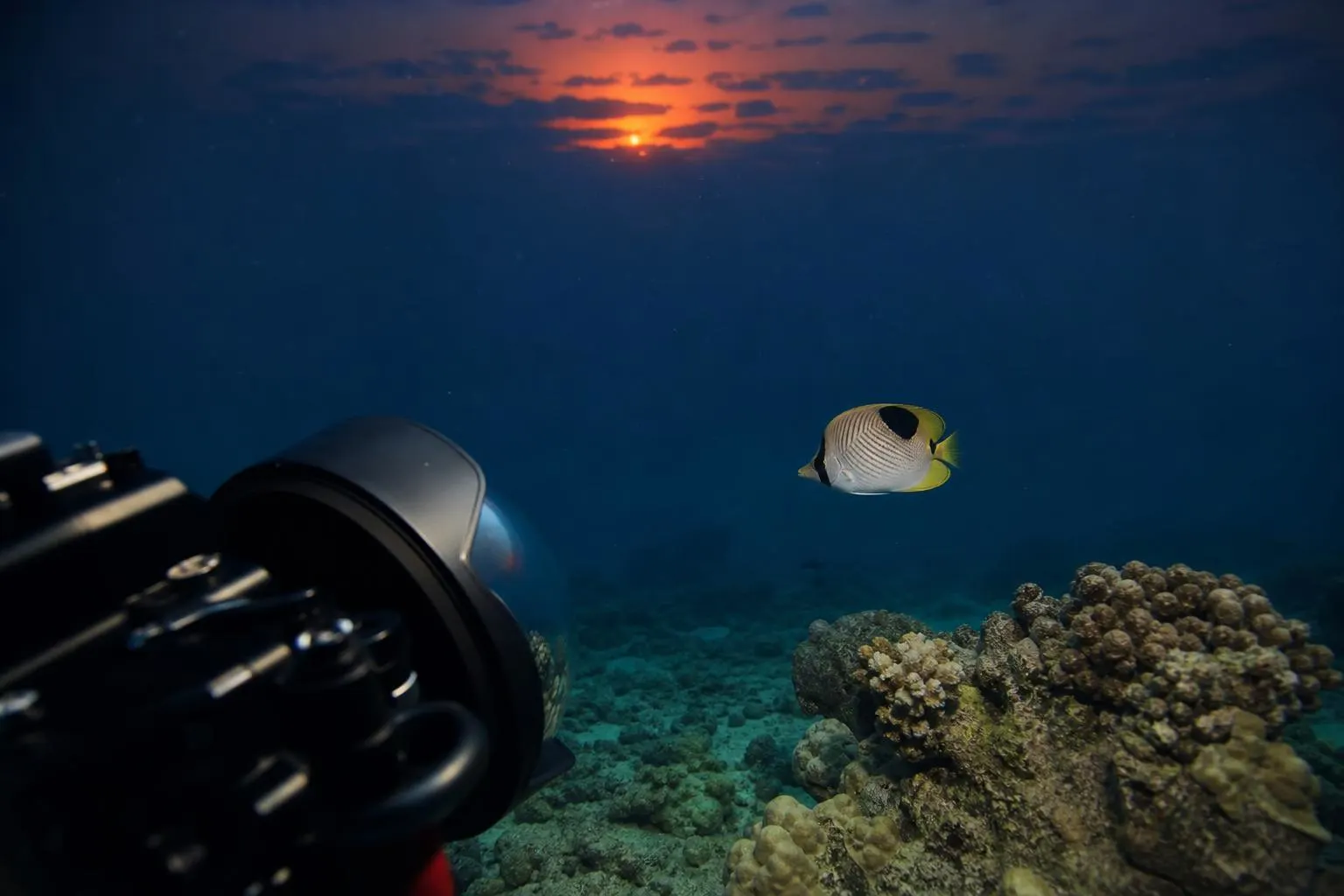
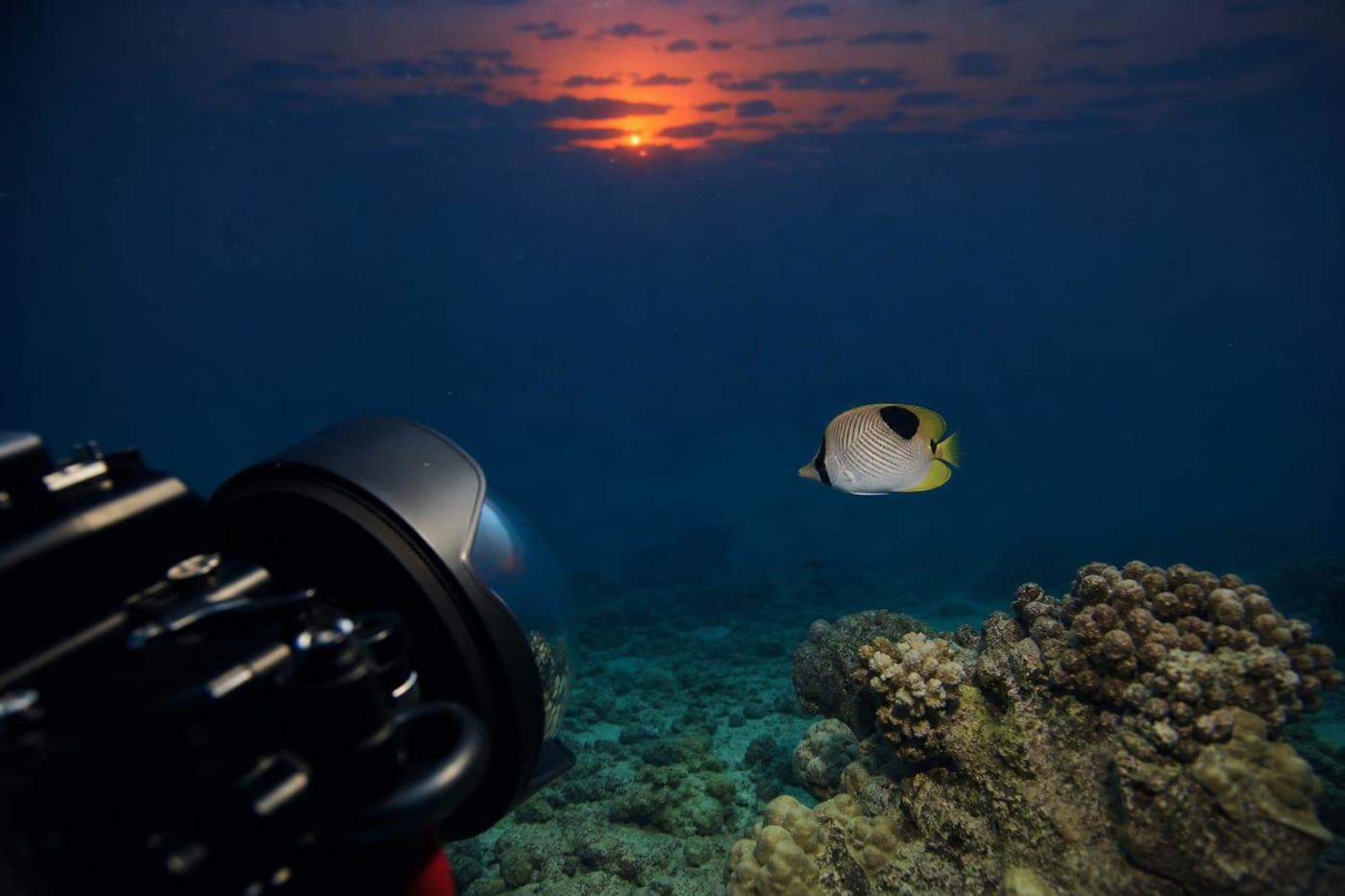
Mandarin fish hide in coral rubble during the day and emerge as daylight fades. Pairs may make brief courtship displays, but the fish set the pace and a display may not happen during your dive. Be prepared to watch without taking a photograph, or to make an image that records only part of the encounter. Patience is useful; pursuing a particular shot is not.
Think of ethical underwater photography as observation first. A photograph is a record of what the fish choose to do, not a reason to change their behaviour. If your position or equipment brings you too close, give the subject space rather than trying to improve the composition. Allowing the fish to remain undisturbed matters more than filling the frame.
Photograph considerately with a buddy
A camera can narrow your attention, so keep checking that you remain aware of your guide, your buddy and other divers. Before settling in to compose an image, look around and make sure you are not blocking another person’s view or losing awareness of the group. Take photographs only when you can stay engaged with the dive around you.
Do not monopolize the viewing position. If another diver is waiting to observe, make room rather than treating the subject as a private photo opportunity. Take a moment to frame an image, then allow others space to look. Sharing the viewing position helps keep the encounter considerate for everyone on the dive.
Keep your equipment from getting in the way of other divers. If you use a light, avoid directing it into another diver’s view. Be aware of where your camera and equipment point as you adjust your position, and do not make others move around you for the sake of a composition. No photograph is worth disrupting a buddy’s experience or losing awareness of what is happening nearby.
Make buddy awareness part of the decision to take each photograph. If you cannot keep track of the guide, your buddy and the other divers while composing, pause and look around before continuing. Your camera is one part of the dive, not the centre of it. Sharing the encounter and leaving others room to observe are as important as keeping your rig clear of the reef and animals.
Set expectations for a natural encounter
Approach the dive as an opportunity to observe mandarin fish, not as a guaranteed mating display or photograph. Their appearance and behaviour depend on natural wildlife activity. The fish may emerge as daylight fades, and pairs may display briefly, but neither outcome can be promised. Going in with that understanding makes it easier to enjoy what happens, whether or not you take an image.
Our guided Sunset Mandarin Fish Dive is a guided sunset dive. The listing gives an assembly time of 4:30 PM and states Advanced Open Water or higher as the certification requirement. If you are planning more diving around the island, our guide to planning the rest of your Malapascua dive trip can help you consider the wider trip alongside this dusk dive.
For confirmation of current requirements or site-specific camera and light guidance, message our team. Set up your camera before the dive, keep your equipment secure and stay attentive to your buddy. Give the fish space and let their behaviour set the pace. That is a sound basis for ethical underwater photography, whether you bring home an image or simply remember the encounter.