

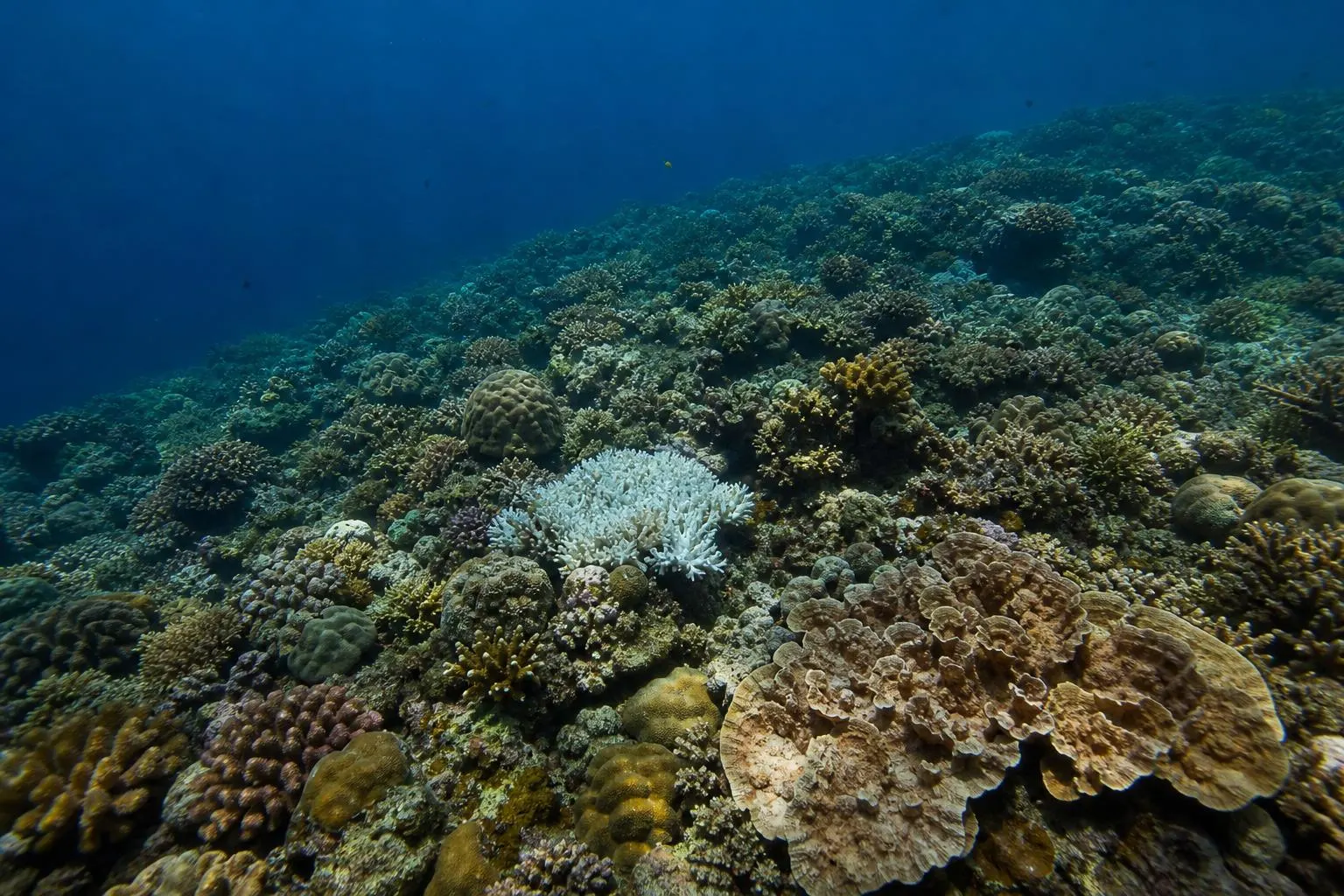

Coral bleaching for divers is best understood as a possible sign of stress, not a diagnosis that can be made from colour alone. When stressed coral loses or expels its symbiotic algae, it can look pale or white. A diver who sees a white patch cannot tell from that brief view whether the coral is dead, what caused the change, how severe the stress is, or whether it will recover. Treat what you see as an observation, not a conclusion.
This is useful context for any reef dive, including around Malapascua. We make no claim that bleaching is currently happening on local reefs. If you want to explore the area with a guide, our guided local dive around Malapascua is a fun dive, not a promise of seeing any particular coral condition. The sensible approach is to watch without touching and keep your body and equipment clear of the reef.
Coral bleaching for divers: what it means
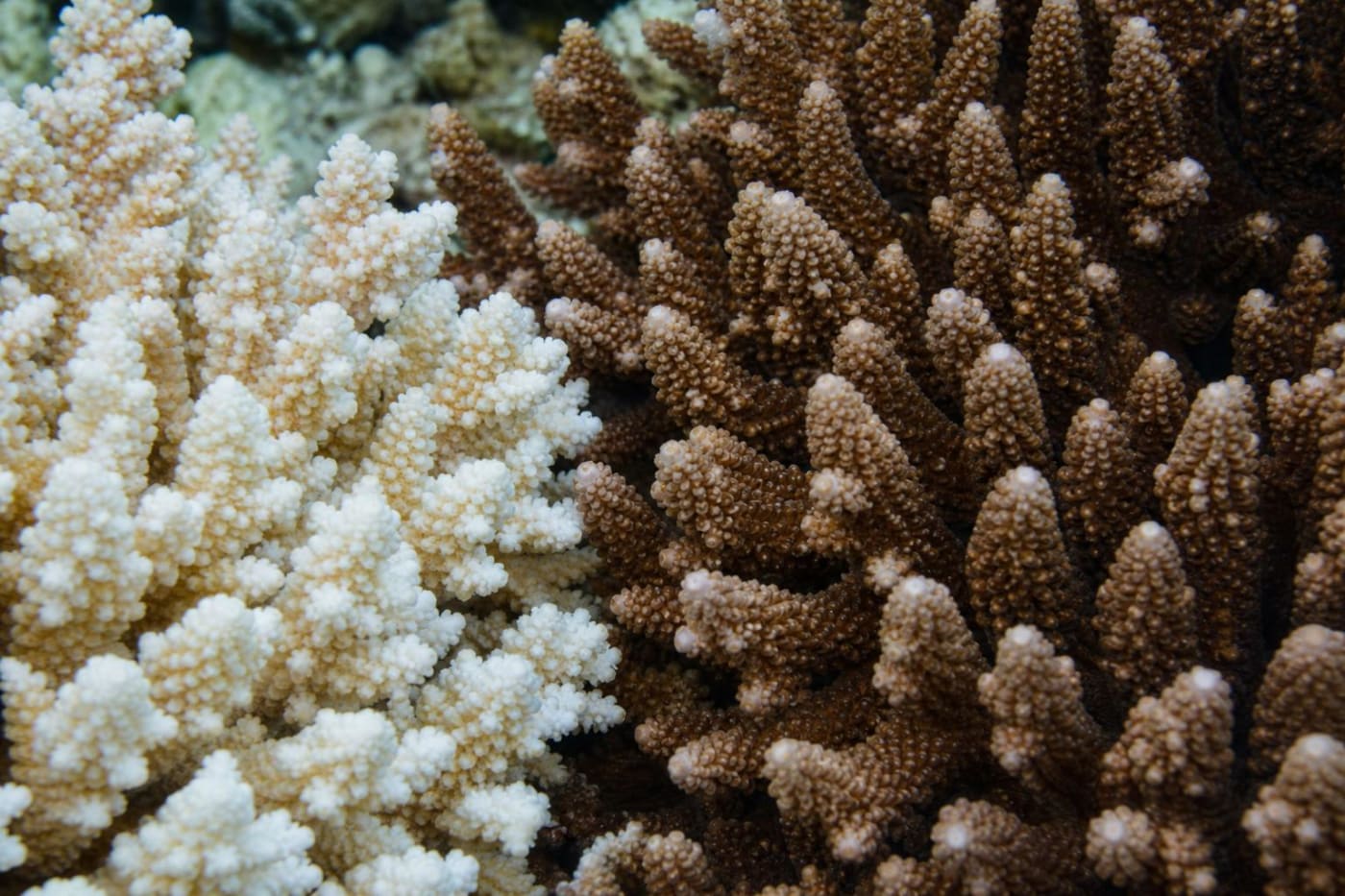
Corals live in association with tiny symbiotic algae. When coral is stressed, it may lose or expel these algae. Their loss can leave coral looking unusually pale or white. That visible change is what divers commonly mean when they talk about coral bleaching.
Underwater, you may notice that one patch looks lighter than nearby coral. That is a useful observation, but it is only a visual clue. It does not establish what is happening within the colony or why it looks that way. There is no need to approach, point at, or touch the coral to make your observation useful. Keep a steady position, look without disturbing the reef, and mention what you noticed to your dive guide.

Bleaching describes a response to stress. It is not a label a diver can reliably apply to every pale or white patch. Colour alone does not confirm the cause or explain the coral’s condition. If you share what you saw after the dive, describe the appearance and location rather than presenting an unverified identification as fact. A careful observation is more useful than a confident guess.
White coral is not automatically dead
Bleached coral is not necessarily dead. Some corals can recover if the stress eases and conditions improve. A pale appearance alone cannot tell you whether a colony is alive or what its future will be. It would be a mistake to treat a white patch as proof that the coral has died, just as it would be a mistake to assume that it will certainly recover.
How long stressful conditions persist matters. The longer the stress continues, the greater the risk that bleached coral will suffer mortality. That risk does not let a diver predict the fate of a particular colony during a dive. You are seeing one moment, not the history of the coral or the conditions it will experience afterwards.
This is why “is bleached coral dead” has no reliable answer based on a quick look underwater. A diver can notice colour and where a patch appears, but cannot establish whether the colony is alive, how much stress it has experienced, or whether conditions are improving. Leave the coral undisturbed rather than trying to test its condition by touching it or moving anything around it.
The practical takeaway is simple: notice what you can see, avoid contact, and do not claim more than the observation supports. A guide can hear what you noticed, but a single sighting cannot replace an assessment made with appropriate information. That distinction helps keep reports useful and avoids turning uncertainty into a claim about the whole reef.
What can cause bleaching, and why divers should avoid diagnosing it
Elevated ocean temperature is a leading cause of coral bleaching. Other environmental stresses can also contribute, including changes in light, cold temperatures, freshwater dilution, and pollution or runoff. A white patch does not reveal which of these, if any, is involved. Seeing it on one dive is not enough to establish a cause or determine whether the coral is under continuing stress.
A diver’s view is limited to what is visible at that moment. A brief observation cannot establish how long a colony has looked pale, how much stress it has experienced, or whether conditions have improved. Even a noticeable patch does not provide a complete picture of its severity or prospects for recovery. Avoid turning one sighting into a claim about a whole reef or the surrounding area.
This restraint also matters when describing a sighting to others. State what you observed, such as a pale patch and its location, rather than declaring that a reef is bleaching or that a colony is dead. Around Malapascua, we do not imply that a particular reef is affected. To learn about the places divers visit, explore Malapascua’s dive sites, while keeping any report about reef condition specific to what has been verified.
How to observe a reef without adding pressure
Good buoyancy is one practical way to reduce accidental contact. Keep a controlled position in the water and pay attention to where your fins are as you move. Secure or streamline gauges and other equipment so they do not hang into the reef. These habits help keep hands, fins, and gear away from fragile coral.
Use careful finning and leave enough space between yourself and coral to avoid contact or stirring sediment near it. Do not stand on coral, touch it, or rest equipment against it. Accidental contact from hands, fins, or gear can damage fragile coral, so keeping clear matters even when you are only trying to get a better look.
Responsible observation applies to other reef life too. Do not feed or chase marine wildlife. Watch without interaction and give animals room to behave naturally. If you want to show someone else a pale patch, describe its position to your guide rather than reaching towards it or manoeuvring in a way that brings you close to the coral.
If a patch concerns you, do not touch it or try to assess it at close range. Note its location as accurately as you can without disturbing the dive, then mention the observation to your guide. Keep your description factual and avoid adding a cause you cannot establish. You can also ask your guide what they can confirm and whether there is an appropriate way to pass on the observation.
Small actions, realistic expectations
Staying clear of coral reduces the risk of adding physical stress through accidental contact. It is a worthwhile part of diving responsibly around coral, but it cannot solve global pressures such as ocean warming. The realistic aim underwater is to avoid making local conditions worse through careless movement, not to suggest that careful finning alone can prevent bleaching.
Reducing local stressors, including pollution and overharvesting, can support reef resilience, although it does not remove global climate pressures. As a visiting diver, your direct contribution during a dive is to maintain buoyancy, secure your equipment, fin carefully, and leave wildlife undisturbed. These actions limit avoidable physical impacts and help keep the reef clear of contact from divers.
If you would like to understand what has been observed on a particular dive or how an unusual patch might be reported, ask your guide about current observations and appropriate channels. For questions about arranging a local dive, message our team. You can also read more Malapascua dive guides for practical information before your trip. On the reef, notice carefully, describe honestly, and leave the coral untouched.